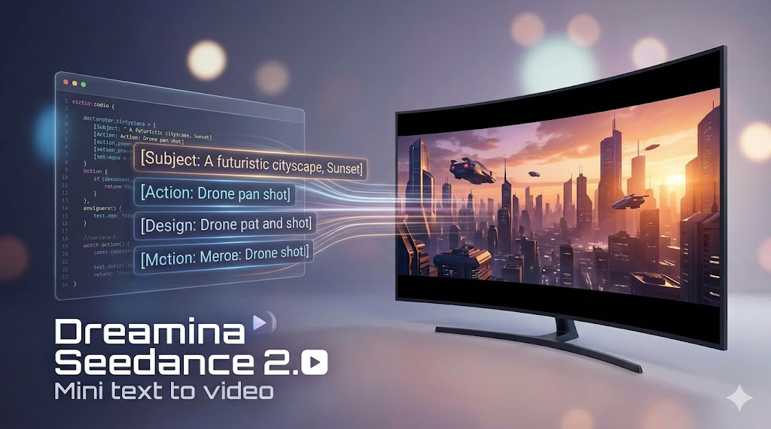
Next-Generation Visual Narrative: Exploring the Impact of Dreamina Seedance 2.0 Mini Text to Video
+
Table of Contents
The landscape of digital content creation has shifted dramatically over the past eighteen months, moving from simple static imagery toward dynamic, high-fidelity motion. As professional creators and marketing teams seek more efficient ways to translate abstract ideas into polished visual narratives, the demand for accessible yet powerful AI tools has reached an inflection point. The recent release of the Dreamina Seedance 2.0 Mini text-to-video platform represents a significant development in this space, offering refined controls that aim to bridge the gap between creative concept and final production.
In a market saturated with generative AI tools, the focus has moved beyond mere capability toward nuanced execution. Creators are no longer satisfied with AI that simply moves; they require precision in style, consistency in character, and efficiency in the iterative process. This latest tool iteration aims to address these professional pain points by streamlining the pipeline for those who rely on rapid content generation for social media and digital marketing campaigns.
Architectural Refinements: Advancing the AI Video Workflow
The primary value of the Dreamina Seedance 2.0 Mini AI video generator stems from its ability to maintain temporal consistency while maximizing computational efficiency. Historically, lighter, speed-oriented generative models struggled with “flicker,” geometric distortion, or unpredictable transitions between frames. By refining the underlying architecture within the official Seedance ecosystem, this updated model allows for more coherent visual stories, enabling creators to maintain a consistent aesthetic across a sequence of generated clips.
What sets this mini tier apart is its balance between efficiency and creative fidelity. It operates as a cost-effective, high-velocity engine specifically tuned for rapid prototyping. Instead of burning through heavy computing credits on experimental concepts, users can leverage the model to run parallel creative tests at a fast pace. The technology introduces advanced prompt interpretation that handles descriptive variables—such as camera tracking, specific lighting conditions, and multi-subject framing—with a degree of stability previously reserved for heavier, high-resource models.
For marketing professionals, this represents a tangible shift in workflow efficiency. Projects that once required hours of manual prompting or expensive stock footage sourcing can now be conceptualized and iterated upon in a fraction of the time. The ability to use Dreamina Seedance 2.0 Mini image-to-video functionality allows teams to take established brand assets—such as product photography or static campaign graphics—and animate them into short-form commercial content. This creates a bridge between existing brand identity and new, engaging video assets without needing to film new footage. By blending a primary prompt with multiple multimodal reference frames, the engine minimizes visual drift, ensuring that key brand elements remain recognizable throughout the motion sequence.
Multi-Reference Control and Cinematic Precision
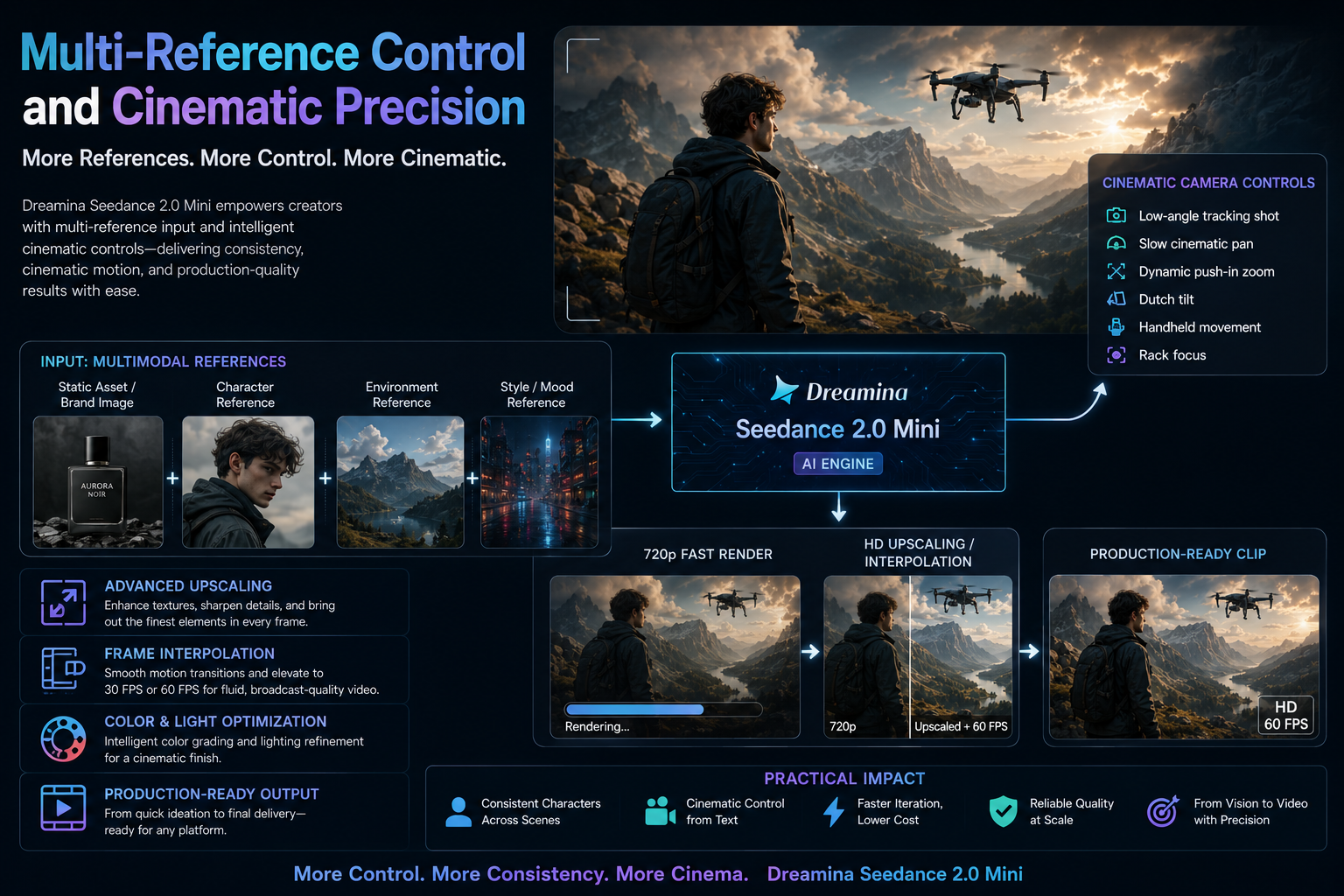
One of the structural hurdles in generative filmmaking has been the lack of precise control over pacing and cinematic composition. The ecosystem surrounding the Dreamina Seedance 2.0 Mini text-to-video platform addresses this by introducing multi-reference capabilities. Creators are no longer restricted to a single text string or a solitary image anchor; instead, the system can process an array of visual and structural references simultaneously. This allows for complex character anchoring and style matching, ensuring that an object or protagonist retains their visual integrity across different environmental backgrounds.
Complementing this structural control is a suite of built-in cinematic camera features. The model understands specific cinematic directions, translating text instructions like “low-angle tracking shot,” “slow cinematic pan,” or “dynamic push-in zoom” into fluid camera physics. This degree of control eliminates much of the unpredictability traditionally associated with AI-generated video, enabling directors and designers to translate their vision into storyboards with greater precision.
[Static Asset / Brand Image] + [Multimodal References]
│
▼
┌────────────────────────────────────────┐
│ Dreamina Seedance 2.0 Mini Engine │──► [Cinematic Camera Controls]
└────────────────────────────────────────┘
│
▼
[720p Fast Render] ──► [HD Upscaling / Interpolation] ──► [Production-Ready Clip]
Furthermore, the post-generation pipeline includes native enhancement tools designed to polish the raw output. Once a clip is rendered, creators can utilize advanced upscaling functions to sharpen textures and enhance fine details, such as facial expressions or product surfaces. To address the choppiness sometimes found in fast-turnaround AI video, frame interpolation features allow users to smooth out motion transitions, lifting standard outputs into fluid 30 FPS or 60 FPS sequences suitable for broadcast or high-quality digital feeds.
Practical Applications in Modern Content Strategy
The integration of advanced AI tools into standard marketing workflows has moved from an experimental phase to a functional necessity. Companies, independent creators, and digital agencies are increasingly using the Dreamina Seedance 2.0 Mini framework to enhance visual storytelling in several key domains:
- High-Volume Social Media Ads: Rapid content generation is essential for staying relevant on platforms where trends peak and fade within days. Marketers can rapidly deploy A/B testing variations for platforms like TikTok or Instagram Reels, adjusting visual hooks and narrative angles without multiplying production costs.
- Short Drama and Narrative Fragments: Independent filmmakers and digital storytellers utilize the mini model to generate rapid narrative beats, transitional shots, and character reactions. Because the model minimizes character drift, it can produce cohesive, multi-scene story fragments efficiently.
- E-Commerce and Product Promotion: Small to medium-sized businesses often face resource constraints when it comes to high-quality video production. By converting flat product displays or text specifications into dynamic promotional clips, smaller teams can produce professional-grade visual content that competes with larger studios, leveling the playing field in competitive digital markets.
- Agency Mockups and Animatics: Before committing to an expensive, multi-day physical shoot, production houses can generate highly descriptive video mockups to pitch concepts to stakeholders. This reduces alignment friction and visualizes creative directions early in the timeline.
Balancing Human Intent and Algorithmic Execution
While the capabilities of machine learning models are expanding, the role of the human creator remains paramount. The system is designed as a tool for augmentation rather than total automation. The platform relies heavily on the creative intuition of the user to provide detailed, well-structured prompts that guide the model toward the intended result. A successful asset depends entirely on the writer’s ability to articulate lighting, atmosphere, lens feel, and subject behavior.
The efficiency gains provided by the system allow creators to spend less time on technical execution—such as basic rendering or frame-by-frame adjustment—and more time on high-level narrative strategy. By offloading the initial visualization phase to the AI, creative teams are empowered to experiment with more daring visual styles and complex narrative structures. This partnership allows for a higher volume of creative output while maintaining a focus on brand quality.
Ecosystem Integration and Industry Outlook
As the digital landscape moves forward, the primary metric for success for any generative platform will be its integration with existing creative ecosystems. Creative tools cannot exist in isolation; they must fit naturally into the timeline-based editors, audio suites, and post-production software that professionals use daily. By bridging the gap between standalone text-to-video generation and the broader CapCut and Dreamina editing pipelines, this launch emphasizes practical utility over technical novelty.
The ongoing refinement of these models suggests that the industry is entering a period where the barrier between an idea and a finished video will continue to shrink. For professionals in marketing, design, and digital content creation, success will increasingly be defined not by the scale of production budgets, but by the ability to effectively communicate with and direct these AI models on how to blend human creative intent with algorithmic capability to produce content that feels authentic, evocative, and purposeful.
Media Contact
For further inquiries, technical documentation, or additional information regarding the integration of these tools into professional production pipelines, don’t hesitate to get in touch with the media representative below:
- Contact Person: Ming Hu
- Email: capcutweb@bytedance.com
- Company Name: CapCut