The Rise of On Demand Home Services: Are They Worth It?
+
Table of Contents
- 1 Why Cleaning Services Are a Popular Starting Point
- 1.1 Convenience Is About More Than Saving Time
- 1.2 When Outsourcing Makes the Most Sense
- 1.3 How to Decide Whether the Cost Is Worth It
- 1.4 What to Check Before Booking
- 1.5 Start With One Task Rather Than Outsourcing Everything
- 1.6 Outsourcing Does Not Replace Shared Responsibility
- 1.7 The Limits of On Demand Convenience
- 1.8 Are On Demand Home Services Worth It?
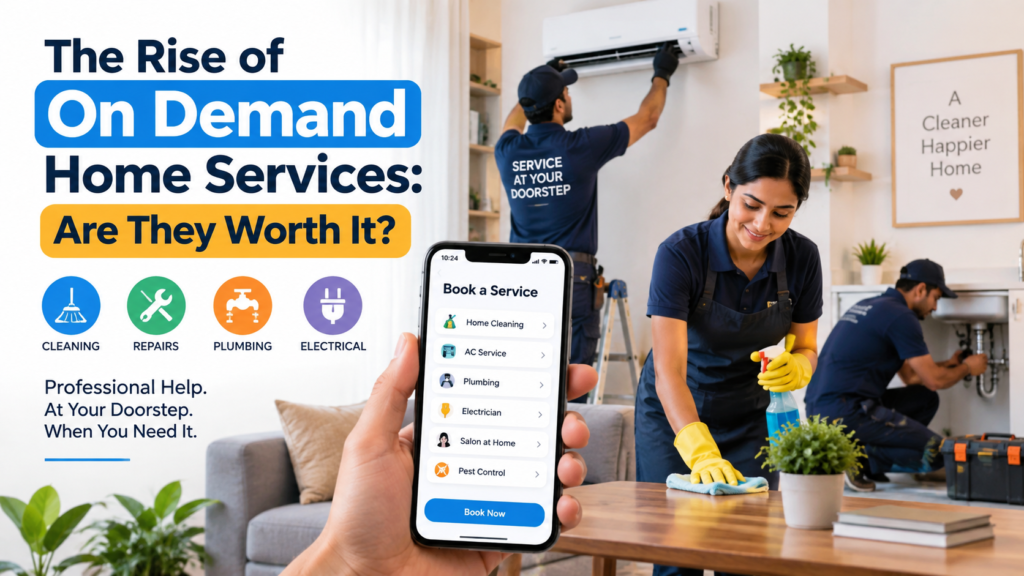
On demand home services allow people to arrange help with household tasks through an online platform, app, or booking service. Depending on the provider, this might include cleaning, laundry, grocery delivery, furniture assembly, yard maintenance, or other practical jobs around the home. Some services are designed for occasional bookings, while others offer recurring appointments or membership plans.
The main attraction is flexibility. Rather than committing to a permanent arrangement, families can often choose the type of help they need and schedule it around their routine. However, the experience can vary between providers, so it is important to understand exactly what is included before making a booking.
Why Cleaning Services Are a Popular Starting Point
Cleaning is one of the most common household responsibilities families consider outsourcing because it takes time and needs to be repeated regularly. Parents may be able to keep up with dishes and everyday tidying but struggle to find time for bathrooms, floors, and deeper cleaning. Hiring someone to handle those tasks can make the rest of the household routine feel more manageable.
For a practical example, the Homeaglow cleaning service review published by The Everymom shares a busy mother’s experience with booking a cleaner and incorporating professional cleaning into her family routine. The sponsored review discusses the convenience of online scheduling and the relief of having deeper cleaning handled by someone else. It is a useful perspective for parents considering whether a similar service would fit their own needs, although individual experiences and service terms can vary.
Convenience Is About More Than Saving Time
The value of outsourcing is not limited to the minutes or hours spent completing a chore. Household tasks also require planning, remembering, and coordinating. Someone has to notice that the bathroom needs cleaning, find the supplies, decide when the work can be done, and make sure it does not conflict with other family commitments.
A service that removes both the physical work and some of the planning can be especially useful. For example, a recurring cleaning appointment may reduce the need to decide when to tackle deeper cleaning each week. Grocery delivery can make it easier to shop during a busy period without adding another errand to the calendar. The benefit is often the mental space created when one less responsibility needs constant attention.
When Outsourcing Makes the Most Sense
On demand services tend to be most valuable when a particular task is repeatedly causing stress or taking time away from something important. A family with young children may benefit from occasional deep cleaning, while a household with demanding work schedules might find grocery delivery more useful. Someone recovering from an illness or managing a temporary physical limitation may need practical help with tasks that are normally easy to complete.
It can also make sense to arrange support around specific events. Preparing for guests, moving into a new home, or managing a particularly busy school week can create extra work that is difficult to fit into the normal routine. Occasional help can be a practical solution without becoming a permanent household expense.
How to Decide Whether the Cost Is Worth It
The cost of a service should be considered alongside the benefit it provides. A cleaning appointment may be worthwhile for one family because it frees up a weekend, while another family may prefer to spend that money elsewhere. There is no universal answer because household budgets, schedules, and priorities are different.
Start by identifying the task you would most like to outsource and how often you need help. Compare the full cost with the amount of time and effort it would save. If a service offers a membership or recurring plan, review the terms carefully, including any minimum commitment, cancellation rules, and additional charges. A low introductory price does not necessarily represent the total cost of using a service over time.
What to Check Before Booking
A convenient booking process should not replace careful consideration of the service itself. Before arranging an appointment, make sure you understand what work is included, how long the appointment lasts, and whether you need to provide supplies or equipment. If you have specific priorities, communicate them clearly before the service begins.
It is also worth reviewing the provider’s policies regarding cancellations, rescheduling, damage, and customer support. Read recent customer feedback where available and make sure you are comfortable with the arrangements for allowing someone into your home. Taking a little time to understand these details can help prevent misunderstandings and make the experience more useful.
Start With One Task Rather Than Outsourcing Everything
It can be tempting to sign up for several services when household responsibilities feel overwhelming. However, introducing too many new arrangements at once can create additional scheduling and financial pressure. A simpler approach is to begin with the task that causes the most difficulty.
Try one cleaning appointment, a grocery delivery during a busy week, or occasional help with a specific maintenance job. Afterward, consider whether the service actually reduced your workload and whether the cost felt reasonable. If it worked well, you can decide whether to use it again. If it did not, you can adjust your expectations or try a different approach without having committed to a major change.
Outsourcing Does Not Replace Shared Responsibility
Hiring help can reduce household work, but it should not mean that one parent becomes responsible for managing every service. Researching providers, scheduling appointments, preparing the home, and following up afterward can all become part of the mental load. If those responsibilities fall on the same person who already manages most household tasks, the benefit may be smaller than expected.
Discuss outsourcing decisions with your partner or other household members. Agree on who will handle bookings, communicate with providers, and manage any preparation needed. Children can also continue contributing to age appropriate chores. Outside help works best when it supports a shared household routine rather than replacing the idea that everyone has a role in maintaining the home.
The Limits of On Demand Convenience
Not every household task is suitable for outsourcing, and not every service will deliver the same level of convenience. Availability may be limited in some areas, appointments may need to be booked in advance, and certain jobs may require specialized professionals. Families should also consider whether they are comfortable with a provider entering their home or handling personal belongings.
There may be tasks you prefer to keep within the family because they are simple, enjoyable, or part of teaching children responsibility. Cooking together, gardening, or organizing a child’s room can sometimes be meaningful activities rather than chores you want to eliminate. The goal is to choose help selectively, not to remove every household responsibility from your life.
Are On Demand Home Services Worth It?
On demand home services can be worth it when they solve a recurring problem, fit comfortably within your budget, and give your family more time or energy for other priorities. They are especially useful when the work being outsourced is time consuming, difficult to schedule, or creating unnecessary stress.
The best approach is to evaluate your household’s actual needs rather than assuming that convenience is always worth paying for. Start small, review the full service terms, and consider whether the experience makes your routine easier. A service that looks appealing in an advertisement may not be the right fit, while occasional help with one difficult task could make a meaningful difference.
Ultimately, a well managed home is not one where every chore is completed by the people who live there. It is one where responsibilities are handled in a way that supports the family’s comfort, finances, and quality of life. When used thoughtfully, on demand services can be one more practical tool for making busy home life easier.