Common Challenges of AI Procurement Solutions and How to Overcome Them
+
Table of Contents
- 1 Understanding AI Procurement Solutions
- 1.1 Challenge 1: Poor Data Quality
- 1.2 How to Overcome It
- 1.3 Challenge 2: Resistance to Change
- 1.4 How to Overcome It
- 1.5 Challenge 3: Integration with Existing Systems
- 1.6 How to Overcome It
- 1.7 Challenge 4: Supplier Data and Risk Management
- 1.8 How to Overcome It
- 1.9 Challenge 5: Lack of Internal Expertise
- 1.10 How to Overcome It
- 1.11 Challenge 6: Measuring ROI
- 1.12 How to Overcome It
- 1.13 Challenge 7: Security and Compliance Concerns
- 1.14 How to Overcome It
- 1.15 The Future of AI Procurement Solutions
- 2 Final Thoughts
Artificial intelligence is rapidly transforming procurement processes across industries. From automating routine tasks to improving supplier management and spend analysis, AI Procurement Solutions are helping organizations achieve greater efficiency, cost savings, and strategic decision-making. However, like any emerging technology, implementing AI in procurement comes with its own set of challenges.
Businesses that understand these obstacles and develop strategies to address them can maximize the value of AI-driven procurement platforms. By leveraging advanced solutions and industry expertise, organizations can successfully navigate the complexities of AI adoption.
Understanding AI Procurement Solutions
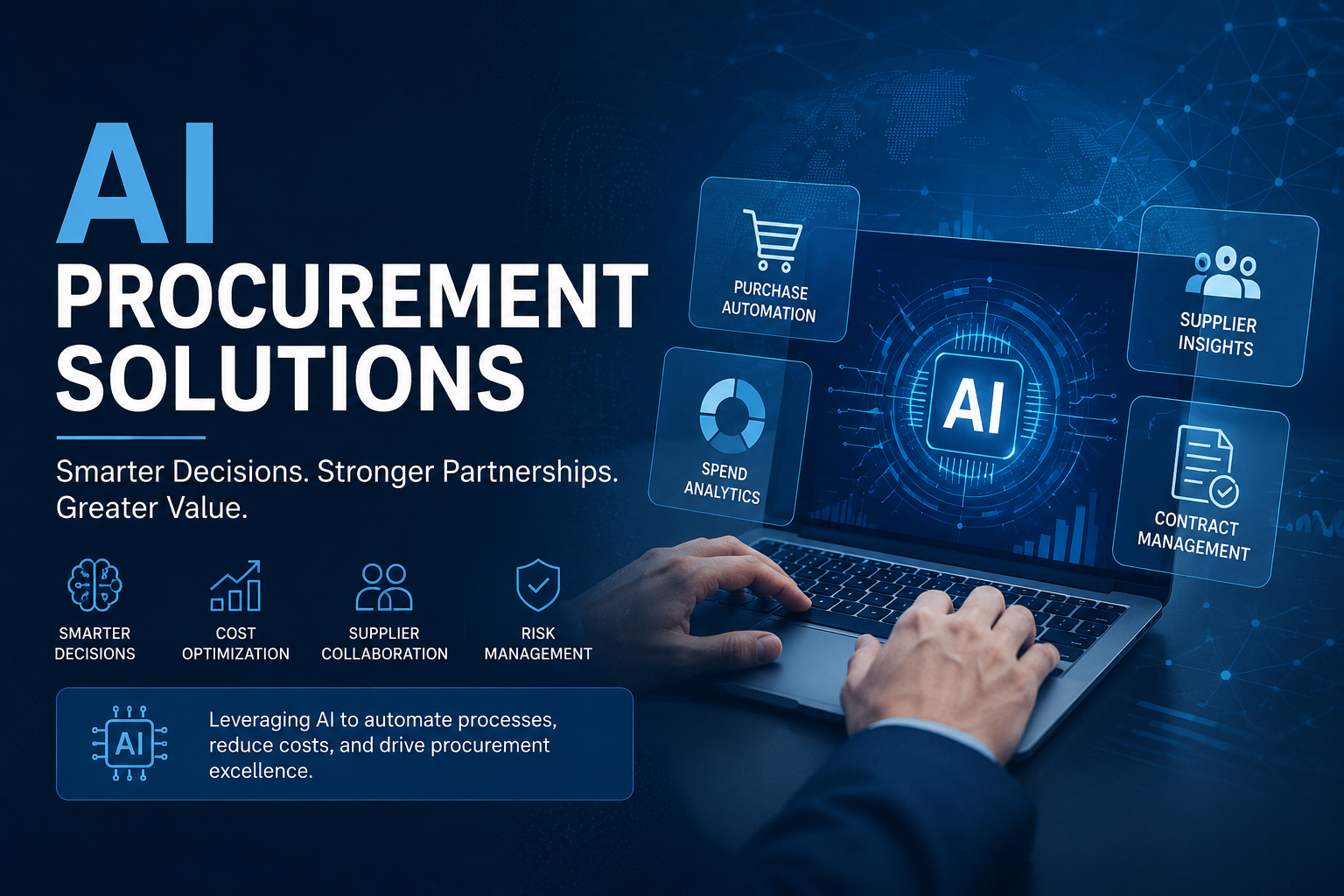
AI Procurement Solutions use artificial intelligence, machine learning, and data analytics to optimize procurement activities. These solutions can automate sourcing, supplier evaluation, contract management, spend analysis, and purchasing workflows. By analyzing large volumes of data, AI helps procurement teams make informed decisions faster and more accurately.
Despite the numerous advantages, organizations often encounter several challenges during implementation and ongoing use.
Challenge 1: Poor Data Quality
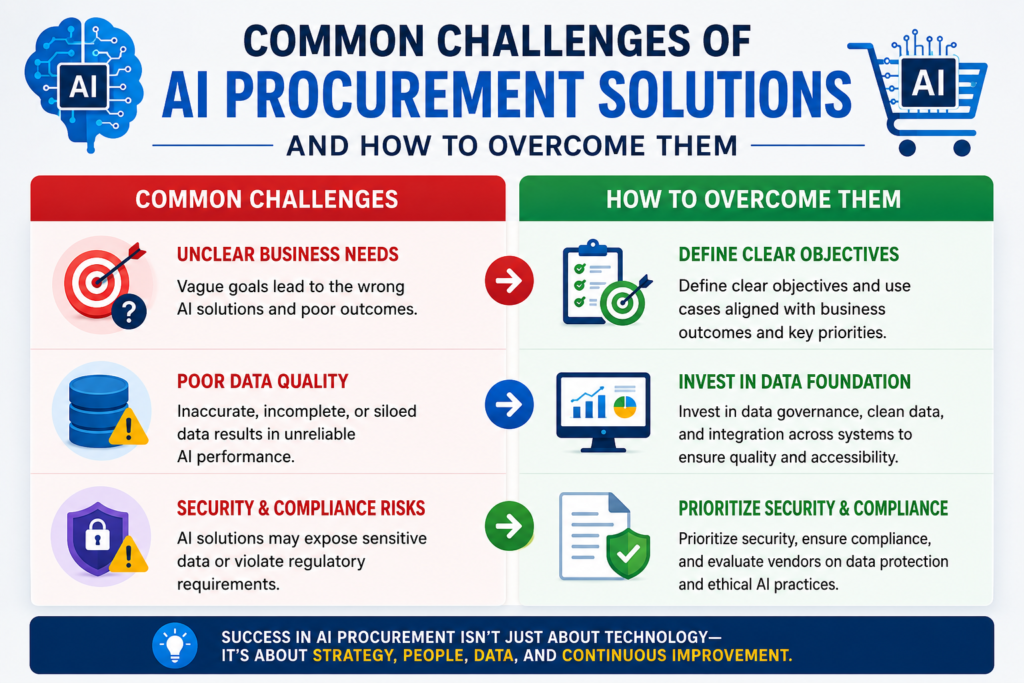
AI systems rely heavily on accurate and structured data. Many organizations struggle with inconsistent supplier information, duplicate records, incomplete procurement data, and outdated databases. Poor-quality data can reduce the effectiveness of AI algorithms and lead to inaccurate recommendations.
How to Overcome It
Organizations should establish strong data governance practices before implementing AI Procurement Solutions. Regular data cleansing, standardization, and validation processes help ensure that AI models receive reliable information. Procurement teams should also integrate data from multiple systems into a centralized platform for better visibility and accuracy.
Challenge 2: Resistance to Change
Employees may be hesitant to adopt AI technologies due to concerns about job displacement, unfamiliar workflows, or a lack of understanding about the benefits of automation. Resistance from stakeholders can slow implementation and reduce the effectiveness of AI initiatives.
How to Overcome It
Successful adoption requires clear communication and employee engagement. Organizations should educate procurement teams about how AI Procurement Solutions enhance productivity rather than replace human expertise. Providing training programs, workshops, and ongoing support can help employees feel more comfortable with new technologies and encourage adoption.
Challenge 3: Integration with Existing Systems
Many businesses use multiple procurement, ERP, and financial systems. Integrating AI Procurement Solutions with existing infrastructure can be complex and time-consuming. Compatibility issues may result in data silos and operational inefficiencies.
How to Overcome It
Organizations should choose AI solutions that offer flexible integration capabilities and support common enterprise systems. Working with experienced technology partners can simplify implementation and reduce integration risks. Conducting a thorough assessment of existing systems before deployment can also help identify potential challenges early in the process.
Challenge 4: Supplier Data and Risk Management
AI-driven procurement relies on accurate supplier information to assess performance, identify risks, and support sourcing decisions. Incomplete or unreliable supplier data can limit the effectiveness of AI-powered insights.
How to Overcome It
Procurement teams should establish standardized supplier onboarding processes and maintain updated supplier profiles. Continuous monitoring and supplier performance evaluations can improve data accuracy. Advanced AI Procurement Solutions can also help identify risk patterns and proactively address potential supplier issues before they impact operations.
Challenge 5: Lack of Internal Expertise
Implementing AI technologies often requires specialized knowledge in data analytics, machine learning, and procurement transformation. Many organizations lack the internal expertise needed to manage AI initiatives effectively.
How to Overcome It
Businesses can address this challenge by investing in employee training and partnering with experienced AI procurement providers. Solutions from innovative companies such as Levelpath offer user-friendly interfaces and advanced capabilities that simplify adoption while reducing technical complexity.
Challenge 6: Measuring ROI
Some organizations struggle to quantify the return on investment from AI Procurement Solutions. Without clear performance metrics, it can be difficult to justify continued investment or identify areas for improvement.
How to Overcome It
Organizations should establish measurable goals before implementation. Key performance indicators may include procurement cycle times, supplier performance, cost savings, contract compliance, and spend visibility. Regular reporting and performance tracking enable procurement leaders to evaluate success and optimize AI initiatives over time.
Challenge 7: Security and Compliance Concerns
Procurement processes often involve sensitive supplier, financial, and contractual information. Organizations may worry about data security, privacy, and regulatory compliance when implementing AI-powered platforms.
How to Overcome It
Businesses should select AI Procurement Solutions that prioritize security, data protection, and compliance. Features such as role-based access controls, encryption, audit trails, and compliance monitoring can help safeguard critical information. Regular security assessments and policy reviews further strengthen protection efforts.
Also Read- How Classroom 30X Is Changing the Education System
The Future of AI Procurement Solutions
As artificial intelligence continues to evolve, procurement teams will gain access to more advanced capabilities, including predictive analytics, intelligent supplier recommendations, automated negotiations, and enhanced decision support. Organizations that proactively address implementation challenges will be better positioned to realize the full potential of AI-driven procurement.
Industry leaders are increasingly recognizing the strategic value of AI Procurement Solutions for improving efficiency, reducing costs, and strengthening supplier relationships. By adopting best practices and leveraging innovative platforms like Levelpath, businesses can accelerate digital transformation and build more resilient procurement operations.
Final Thoughts
AI Procurement Solutions offer significant opportunities for organizations seeking to modernize procurement processes and improve decision-making. However, challenges such as poor data quality, resistance to change, integration complexities, supplier risk management, limited expertise, ROI measurement, and security concerns can impact success.
By implementing strong governance practices, investing in training, choosing the right technology partners, and continuously monitoring performance, organizations can overcome these obstacles and unlock the full benefits of AI-powered procurement. With the right approach and solutions from providers like Levelpath, businesses can create a more efficient, data-driven, and future-ready procurement function.