What Is An Ads Exchange Login And How Does It Work?
+
Table of Contents
- 1 What Is an Ad Exchange?
- 2 How Does an Ad Exchange Work?
- 2.1 For Publishers
- 2.2 For Advertisers
- 3 Advantages Of Using Ad Exchange
- 3.1 What is an Ad Exchange versus a Supply-Side Platform?
- 3.2 What Is the Difference Between an Ad Exchange and an Ad Network?
- 4 Final Thoughts: Selecting the Best Ad Exchange
- 4.1 FAQs
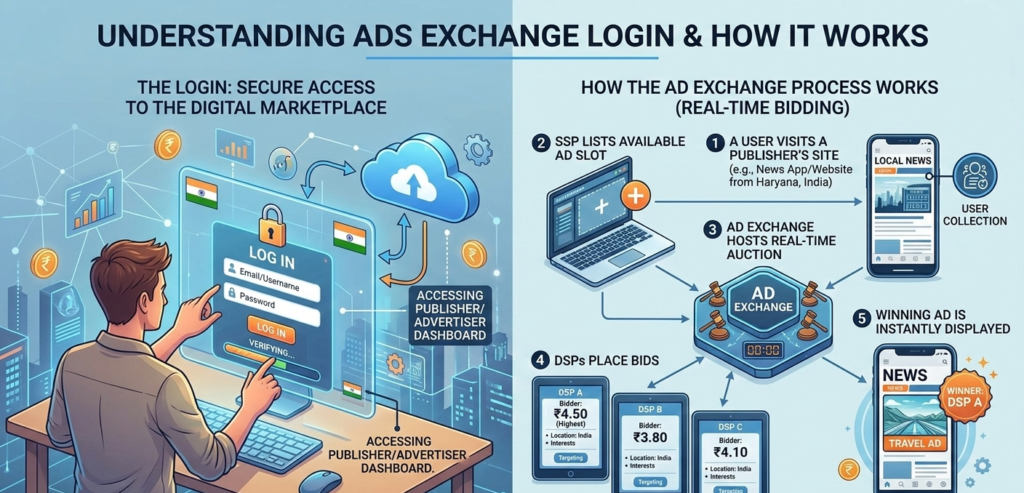
Ads Exchange Login is an online marketplace where publishers (those who own websites and apps) and advertisers (those who want to place ads) come together to buy and sell inventory in real-time.
Ad exchanges are central to the digital advertising ecosystem, enabling the buying and selling of ad space in real-time through a framework known as real-time bidding (RTB). Ad exchanges are also gaining popularity in the digital advertising age.
The digital advertising market is expected to register an ad spend of $701.20 billion, with programmatic ads increasing by 177.8%, reaching $725.43 billion by 2026.
This article will cover what ad exchanges are, how they work, and discuss why they matter to advertisers and publishers alike. If you’re an advertiser trying to stretch your ad budget as far as it can go, or a publisher looking to maximize revenue from your website, understanding the mechanics of ad exchanges is crucial.
What Is an Ad Exchange?
Publishers can sell and auction their excess ad inventory on the market. This inventory spread will cover various ad types, including display advertisements, native advertisements, mobile advertisements, video advertisements, and in-app advertisements.
This is made possible through real-time bidding (RTB), in which multiple advertisers compete to run their ads on a publisher’s website or app. The buyer who bids the most gets to display their ad. The entire process is almost instantaneous and takes place automatically, making ad exchanges far more efficient than the old way of buying ads.
The key players operating in the market space are demand-side platforms (DSPs) and supply-side platforms (SSPs). Advertisers use DSPs to place bids on available ad inventory, and publishers use SSPs to list their available ad space.
Real-Time Bidding (RTB)
Real-time bidding (RTB) is a system that enables advertisers to bid for ad space as it becomes available. When a user opens a website, all of this happens in milliseconds. When a user visits a page, an auction process for the ad space on it begins. Advertisers bid for each ad placement through their demand-side platforms (DSPs), and the highest bid wins the ad placement. Publishers can sell more of their ad inventory at the best possible sale price. If you’re a publisher, RTB enables you to sell more of your inventory at the best possible price.
Demand-Side and Supply-Side Platforms
Advertisers and publishers participate in an ad exchange through specialized software. Demand-side platforms (DSPs) are tools that advertisers use to bid on ads in real-time. A DSP provides advertisers with the ability to specify targeting (e.g., by demographics, location) and the amount to bid on the available ad space, with the bidding amount determined by the available advertising budget. On the other hand, publishers are listing their ad inventories through supply-side platforms (SSPs).
SSPs enable publishers to organize and sell their ad space, thereby securing the highest value for it. SSPs increase competition by forming connections with various ad exchanges, and more competition generally means more potential revenue for publishers.
How Does an Ad Exchange Work?
-
For Publishers
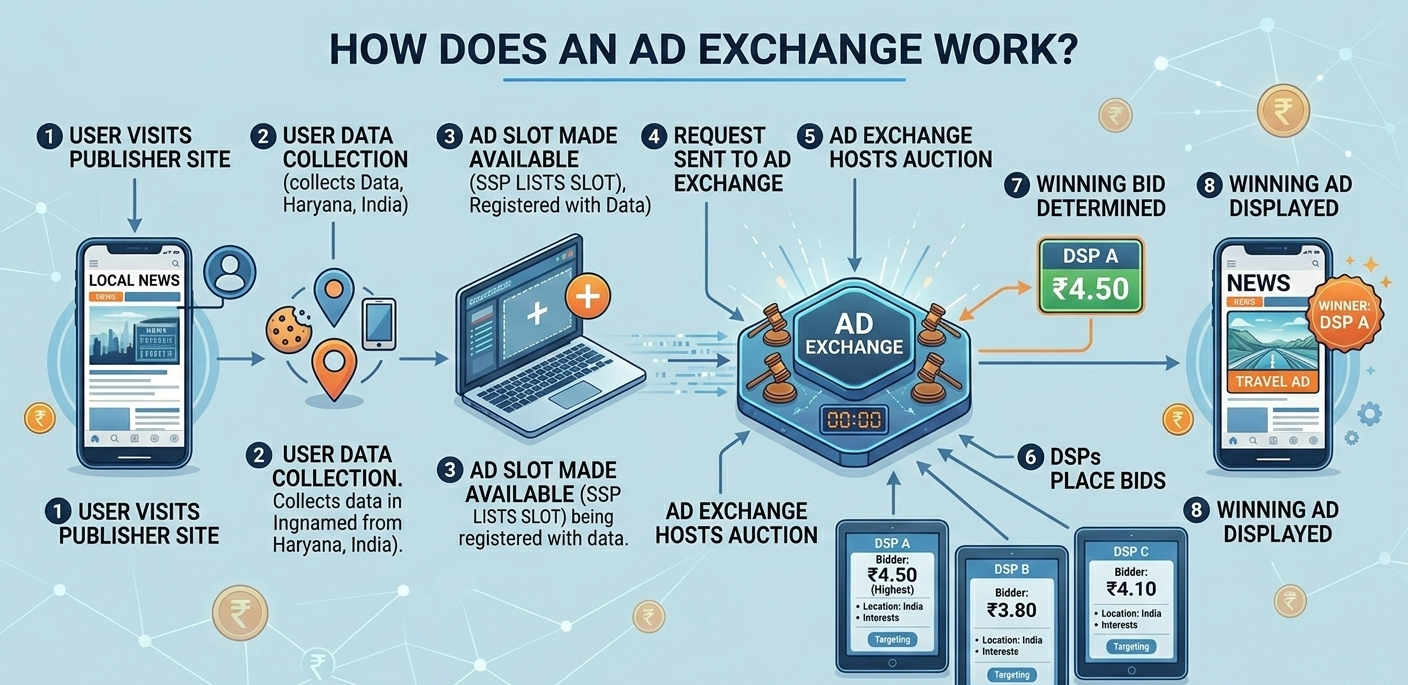
Inventory: A publisher utilizes an SSP to expose its inventory to the ad exchange. That inventory could consist of display banners, video ads, or even native ads.
Visitor Data Collection: When a user visits a publisher’s site, data about the user’s behavior, interests, or previous visits is gathered using cookies or tracking pixels. This data helps target the appropriate ads (of which there can only be four per page, at least on a desktop) to the right people.
Bidding Request: The ad exchange requests bids from advertisers to place on available inventory. The ad exchange then informs the ad network and the publisher that there are matching ad requests, and an ad is served.
Real-Time Auction: Advertisers compete for the ad slots via their DSPs. The bidding occurs in real-time, and the highest bid wins the ad impression.
Ad display: After the auction closes, the winning ad is displayed on the publisher’s site. The advertiser pays for the impression, and the publisher receives a share of the ad’s value.
-
For Advertisers
Bid Setting: The Advertiser sets a maximum bid on the impressions that they are interested in targeting. They can also determine targeting parameters, such as user behavior, location, or device type.
Bidding: Once the ad opportunity is offered, the DSP submits a bid to the ad exchange. Bidding: You can adjust your bids as performance changes and your budget allows.
Auction Winners: The ad of the highest bidder is displayed. Advertisers can measure how well their campaigns are performing and recalibrate their strategies accordingly.
Speed and Automation: The entire process takes place in milliseconds, which is why ad exchanges can handle millions of impressions every day. This rapid auction style enables advertisers to be in front of the most relevant audience at the perfect time and allows publishers to sell their ad space instantly.
Advantages Of Using Ad Exchange
Key Advantages to Publishers and Advertisers Provided by Ad Exchanges:
- Greater Control of Ads for Publishers: Publishers can also determine which ads are displayed on their websites, allowing them to select advertisements that align with their content, audience, and brand. They can also block unwanted ads or ads from particular advertisers.
- More Income for Publishers: Homeowners can serve localized ads to the highest bidders and earn more money from their inventory. The arrangement enables them to earn more money than they would from traditional ad sales.
- Enhanced Advertising Targeting: Advertisers can target ads based on user behavior, location, interests, and demographics. This makes it possible to contact the most interested audience, increasing the efficiency of your campaign.
- Transparency and Effectiveness: Advertisers and publishers can follow the ad results. Ad exchanges and display networks offer precise, real-time data that helps advertisers view exactly how their ads are serving, which in turn makes it easier to optimize campaigns.
- Transactions at a quicker pace: Since ad exchanges are automated, transactions are executed quickly. Ads are traded and sold automatically in real-time, and faster results and less manual effort are generally a good thing.
What is an Ad Exchange versus a Supply-Side Platform?
Contrast the ad exchange with a supply-side platform (SSP), which is a tool for publishers to manage and sell their inventory. It’s essentially a tool, whereas the ad exchange is the mechanism for the actual transaction between buyers and sellers. The SSP links publishers with ad exchanges, enabling them to receive the optimal price for their available ad space.
What Is the Difference Between an Ad Exchange and an Ad Network?
It is an intermediary that buys and sells ads in bulk, which it may group by category, like location or audience. An ad exchange, by contrast, enables advertisers and publishers to engage directly with each other to buy and sell inventory immediately, based on factors such as publisher, context, ad type, and so on. This variance translates to better control, transparency, and flexibility, which are features that ad exchanges offer over ad networks.
Final Thoughts: Selecting the Best Ad Exchange
When selecting an ad exchange, inventory quality, targeting options, and pricing models are all key considerations. You need to find an exchange that works for what you want — either you’re a publisher looking to optimize the amount of money you can earn from your ads, or you’re an advertiser trying to reach the right audience.
FAQs
-
Who Buys from Ad Exchanges?
Ad exchanges sell ad inventory to advertisers, ad networks, and demand-side platforms (DSPs). Publishers also sell their inventory through ad exchanges.
-
Why Do Ad Exchanges Matter?
Ad exchanges simplify the process of purchasing and selling ad space by creating a single, automated marketplace. They provide advertisers with wide access to inventory and the opportunity for publishers to sell their inventory in the most favorable conditions.
-
What Is a Private Exchange?
A private exchange is a closed platform where a specific set of advertisers are able to buy ad space. It’s a managed market so publishers control exactly who has access to their inventory, allowing for better quality and pricing.