How Telehealth Is Making Workplace Leave Easier to Manage
+
Table of Contents
- 1 Telehealth Gives Employees More Ways to Seek Care
- 1.1 It Can Reduce Delays in the Leave Process
- 1.2 Virtual Visits Can Help People With Limited Mobility
- 1.3 It Can Support Mental Health Leave
- 1.4 Telehealth Can Help With Chronic Conditions
- 1.5 Providers Still Need Enough Medical Information
- 2 Digital Forms Can Make Certification Easier
- 2.1 Telehealth Can Help Remote Workers
- 2.2 Employers Benefit From Clear Medical Details
- 2.3 Privacy Must Remain a Top Concern
- 2.4 Telehealth Does Not Guarantee Approval
- 3 Employers Should Build a Clear Digital Process
- 3.1 Managers Still Need Human Skills
- 3.2 Leave Plans Should Include Work Coverage
- 3.3 Telehealth Can Support Return Planning
- 3.4 Access Is Only One Part of Good Leave Management
- 4 Telehealth Can Make Leave More Human
Taking medical leave can feel like a job in itself.
An employee may need to contact human resources, request forms, book a medical visit, gather records, and meet firm due dates. All of this can happen while the person is ill, hurt, or caring for a loved one.
Employers also need clear facts so they can review the request and plan work coverage.
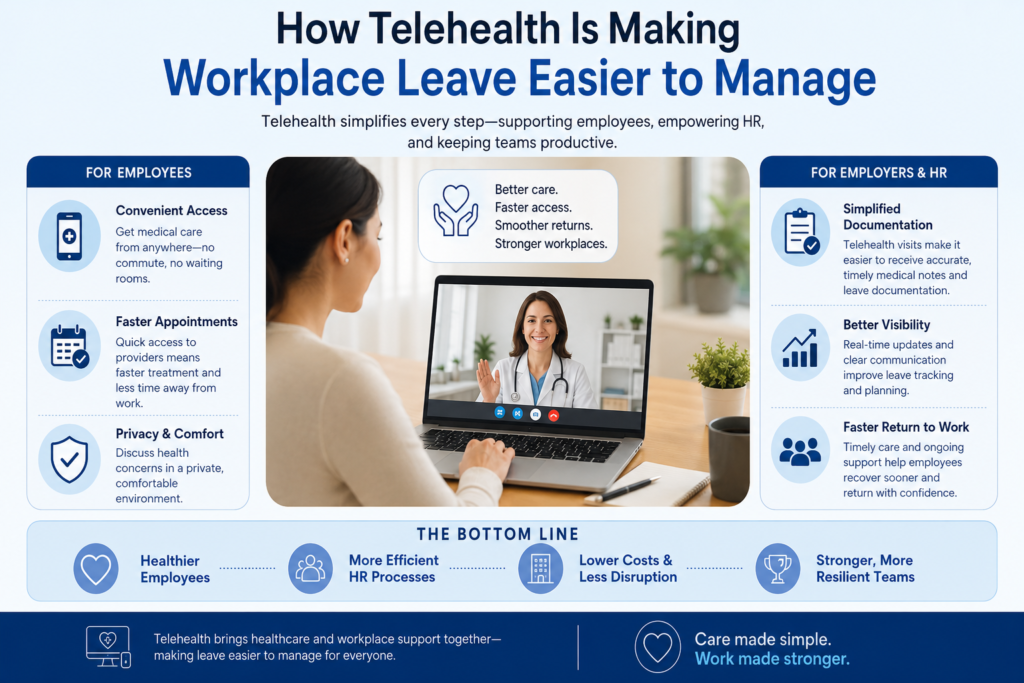
Telehealth can make parts of this process easier. It gives employees a way to speak with a health care provider through a secure video visit. It may also help providers review symptoms, discuss work limits, and complete needed medical forms.
Telehealth Is Making Workplace Leave does not remove every step. Still, it can make the modern workplace leave more open, quick, and easy to manage.
Telehealth Gives Employees More Ways to Seek Care
A trip to a clinic is not always simple.
An employee may live far from their doctor. They may lack a car, have trouble walking, or need to stay home with a child. Their symptoms may also make travel hard.
Telehealth gives them another way to reach care.
A video visit can take place at home or in another private space. The employee can speak with a provider, explain the problem, and ask what type of care may be needed.
This can be useful for many health needs that do not require an exam in the same room.
It may also help an employee begin the leave process sooner rather than waiting several days for an office visit.
It Can Reduce Delays in the Leave Process
Medical leave often involves firm time limits.
An employer may ask the employee to return forms within a set period. A slow appointment can make that hard.
Telehealth may give the employee access to an earlier visit.
That does not mean the provider will approve leave at once. The provider still needs enough facts to make a sound medical choice.
Yet a quick first visit can help the employee learn what records are needed, what treatment may help, and whether more care is required.
Starting early gives the employee more time to deal with missing forms or added questions.
It also gives the employer more time to plan for the person’s absence.
Virtual Visits Can Help People With Limited Mobility
Some health conditions make it hard to leave home.
An employee recovering from surgery may not be able to drive. A person with severe pain may find a long trip too hard. Someone dealing with anxiety may struggle to sit in a busy waiting room.
Telehealth can lower these barriers.
The employee can meet with a provider without adding travel strain to an already hard day.
This can help the person focus on the medical talk instead of the effort needed to reach the clinic.
It may also make follow-up visits easier during a long period of care.
However, the provider may still ask for an office visit, test, or physical exam when the condition requires one.
Telehealth should support proper care, not replace care that must happen in person.
It Can Support Mental Health Leave
Mental health needs can affect a person’s focus, sleep, mood, and ability to work.
Still, some employees delay seeking care because they fear being judged or do not know where to begin.
A virtual visit may feel less hard than entering a new clinic.
The employee can speak from a private and known space. They can explain how symptoms affect daily life and work tasks.
A provider may then discuss therapy, medicine, time away, or other forms of support.
Telehealth can also make repeat care easier. An employee may be able to attend therapy or follow-up visits without taking extra time for travel.
This can be useful when the leave plan requires ongoing treatment.
Telehealth Can Help With Chronic Conditions
Some workers manage health conditions that last for months or years.
Their symptoms may rise and fall. They may need regular visits, tests, or changes to their care plan.
A virtual visit can help with routine check-ins when an in-person exam is not needed.
The provider can ask about symptoms, review the response to treatment, and discuss whether the employee’s work limits have changed.
This may help support a leave request that involves short periods away from work rather than one long absence.
For example, the employee may need time for care visits or days when symptoms prevent them from doing the job.
Clear and ongoing medical records can help the provider explain these needs.
Providers Still Need Enough Medical Information
A video visit is still a medical visit.
The employee should prepare for it with care.
They may need to share their symptoms, medical history, current medicine, past treatment, and the way the condition affects work.
The provider may also ask for records from another doctor or clinic.
Employees should not expect a provider to sign a form with no review. A proper evaluation protects the worker, the provider, and the employer.
The employee should give clear examples of work limits.
Instead of saying that work feels hard, they might explain that they cannot stand for a full shift, focus during long calls, drive, lift goods, or work through a severe symptom flare.
Specific facts can help the provider understand the need.
Digital Forms Can Make Certification Easier
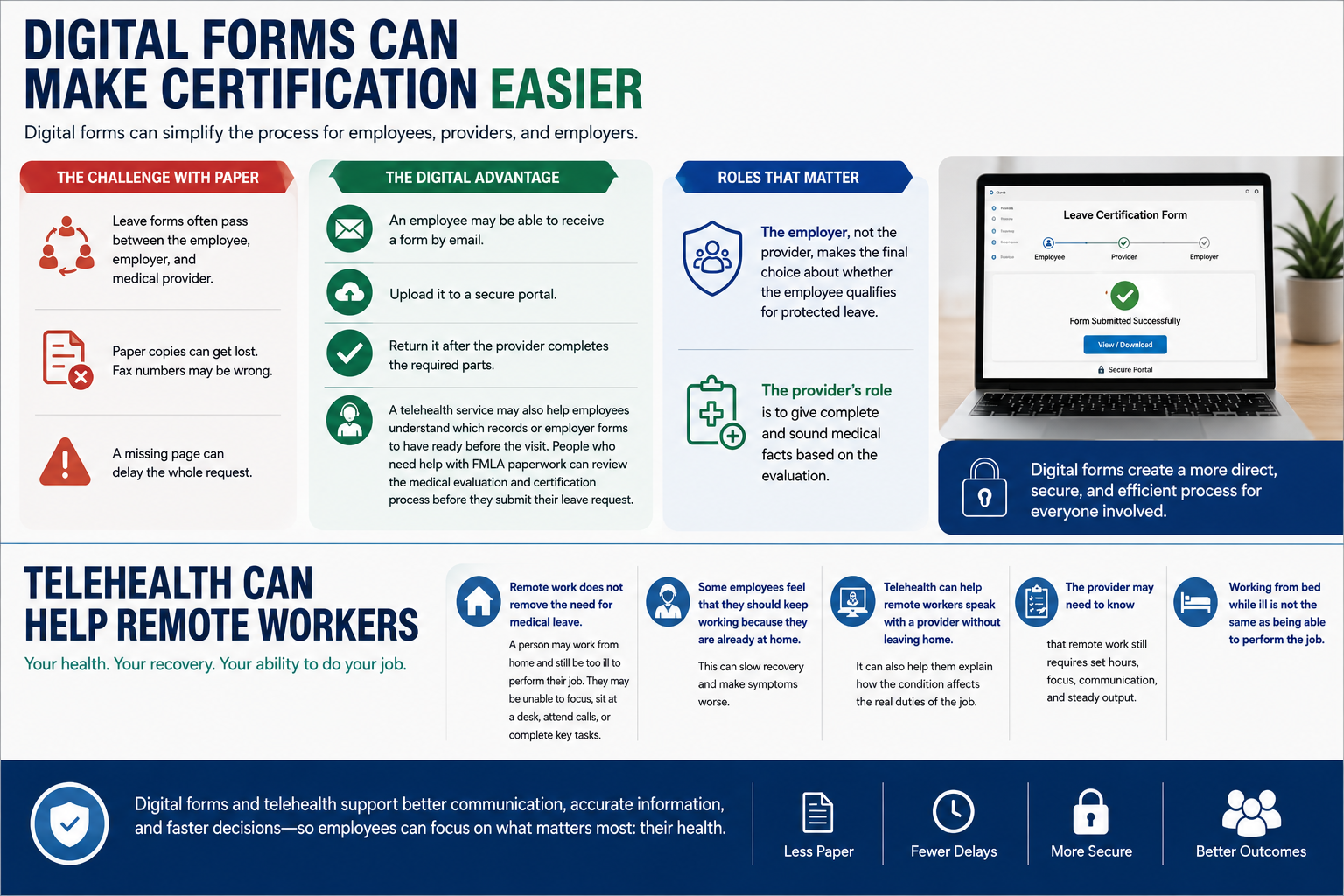
Leave forms often pass between the employee, employer, and medical provider.
Paper copies can get lost. Fax numbers may be wrong. A missing page can delay the whole request.
Digital forms can make the process more direct.
An employee may be able to receive a form by email, upload it to a secure portal, and return it after the provider completes the required parts.
A telehealth service may also help employees understand which records or employer forms to have ready before the visit. People who need help with FMLA paperwork can review the medical evaluation and certification process before they submit their leave request.
The employer, not the provider, makes the final choice about whether the employee qualifies for protected leave.
The provider’s role is to give complete and sound medical facts based on the evaluation.
Telehealth Can Help Remote Workers
Remote work does not remove the need for medical leave.
A person may work from home and still be too ill to perform their job. They may be unable to focus, sit at a desk, attend calls, or complete key tasks.
Some employees feel that they should keep working because they are already at home.
This can slow recovery and make symptoms worse.
Telehealth can help remote workers speak with a provider without leaving home. It can also help them explain how the condition affects the real duties of the job.
The provider may need to know that remote work still requires set hours, focus, communication, and steady output.
Working from bed while ill is not the same as being able to perform the job.
Employers Benefit From Clear Medical Details
Employers need enough information to review leave without asking for a full medical history.
A complete certification can explain whether the employee has a serious health need, when the need began, and how long it may last.
It may also state whether the employee needs a full block of leave or smaller periods away.
Clear information helps human resources avoid long rounds of follow-up.
It can also help managers plan work coverage without learning private details they do not need.
Telehealth may speed this process when the provider can review the case and return forms through secure digital tools.
Still, employers should give the employee clear instructions from the start.
They should state which form to use, where to send it, and when it is due.
Privacy Must Remain a Top Concern
Telehealth deals with private health data.
Employees should use a quiet space where other people cannot hear the visit. They should also avoid joining through an open public network when possible.
Providers and digital health services should use secure systems for video visits, records, and forms.
Employers also have a duty to protect the medical details they receive.
Health forms should not sit in a common staff folder or team chat. Access should be limited to people who have a true need to review them.
Managers may only need to know the leave dates, work limits, and plan for task coverage.
They do not need every fact about the diagnosis or treatment.
Telehealth Does Not Guarantee Approval
A virtual visit can make care easier to reach, but it does not promise that leave will be approved.
The provider may find that more records or tests are needed. The medical issue may not support the type of leave requested.
The employee may also fail to meet the job-based rules for a certain leave plan.
Employers have their own role in reviewing work history, company size, and other legal points.
This is why employees should avoid making plans based on an assumed result.
They should complete each step, answer requests on time, and wait for the formal decision.
Telehealth is a tool in the process, not a way to skip the rules.
Employers Should Build a Clear Digital Process
A modern leave process should be easy to follow.
Employees should not have to search through old emails or ask several managers what to do.
Companies can create one clear guide that explains the first contact, required forms, due dates, and return steps.
They can offer a secure place to upload documents and track whether a form has arrived.
Automatic reminders may help employees avoid missed dates.
The system should also make it clear when a form is incomplete and what details are still needed.
A strong digital process can reduce stress for human resources and employees alike.
It can also help the company handle each request in a fairer and steadier way.
Managers Still Need Human Skills
Technology can help move forms, but it cannot replace care.
Managers should respond with respect when an employee shares a health need.
They should not question whether the person looks ill enough or ask for private facts that belong to human resources.
A useful first reply may be simple.
The manager can thank the employee for speaking up, explain that human resources will guide the leave process, and ask what immediate work support is needed.
They should also avoid making the employee feel guilty about the effect on the team.
Work coverage is a business duty. The employee’s main duty during leave is to follow the care plan and recover.
Leave Plans Should Include Work Coverage
A smooth leave process should protect both the employee and the business.
Before the leave starts, the team can list urgent tasks, key files, client needs, and due dates.
The employee should only take part in this step when their health allows it.
Managers can then pause low-value work, move due dates, or assign tasks to other people.
The company should avoid contacting the employee for normal work questions during leave.
Current notes and shared process guides can reduce the need for contact.
This is one reason all companies should avoid keeping key knowledge with only one person.
Good planning lets an employee step away without fear that the whole team will fail.
Telehealth Can Support Return Planning
A provider may also use a virtual visit to check the employee’s progress before the return to work.
The employee can explain which symptoms have improved and which limits remain.
The provider may then give updated guidance based on the medical need.
The employer might also request a return note or other form, based on its policy and the law.
A clear return plan can help the employee ease back into the role.
They may need time to review missed changes, restore system access, or begin with a smaller task list.
Telehealth can make follow-up care easier during this stage as well.
Also Read- How can Developers can Benefits from Model XUCVIHKDS
Access Is Only One Part of Good Leave Management
Telehealth can remove many barriers.
It can reduce travel, provide faster access to some providers, and help people manage forms from home.
But good workplace leave still requires clear rules, fair treatment, secure data, and kind managers.
Employees must understand what their employer needs. Providers must complete forms based on a real medical review. Human resources must protect private details and explain the process.
When these parts work together, leave becomes easier to manage.
The employee can focus more on care, while the employer gets the information needed to plan the work.
Telehealth Can Make Leave More Human
Medical leave often begins at a difficult point in a person’s life.
The employee may feel sick, afraid, or unsure about the future. A slow and confusing process can add more strain.
Telehealth cannot solve every problem. It cannot replace each office visit or guarantee that a leave request will qualify.
What it can do is give employees another path to care.
It can bring the provider visit closer, support digital records, and help move medical forms through the process with less travel and delay.
For modern employers, that makes telehealth a useful part of a clear and caring leave system.